Climate Change Impacts on Microbial Communities in Agriculture Systems
The Role of Microbial Activity and Vegetation Management Strategies in Agricultural Ditches on Greenhouse Gas Emissions
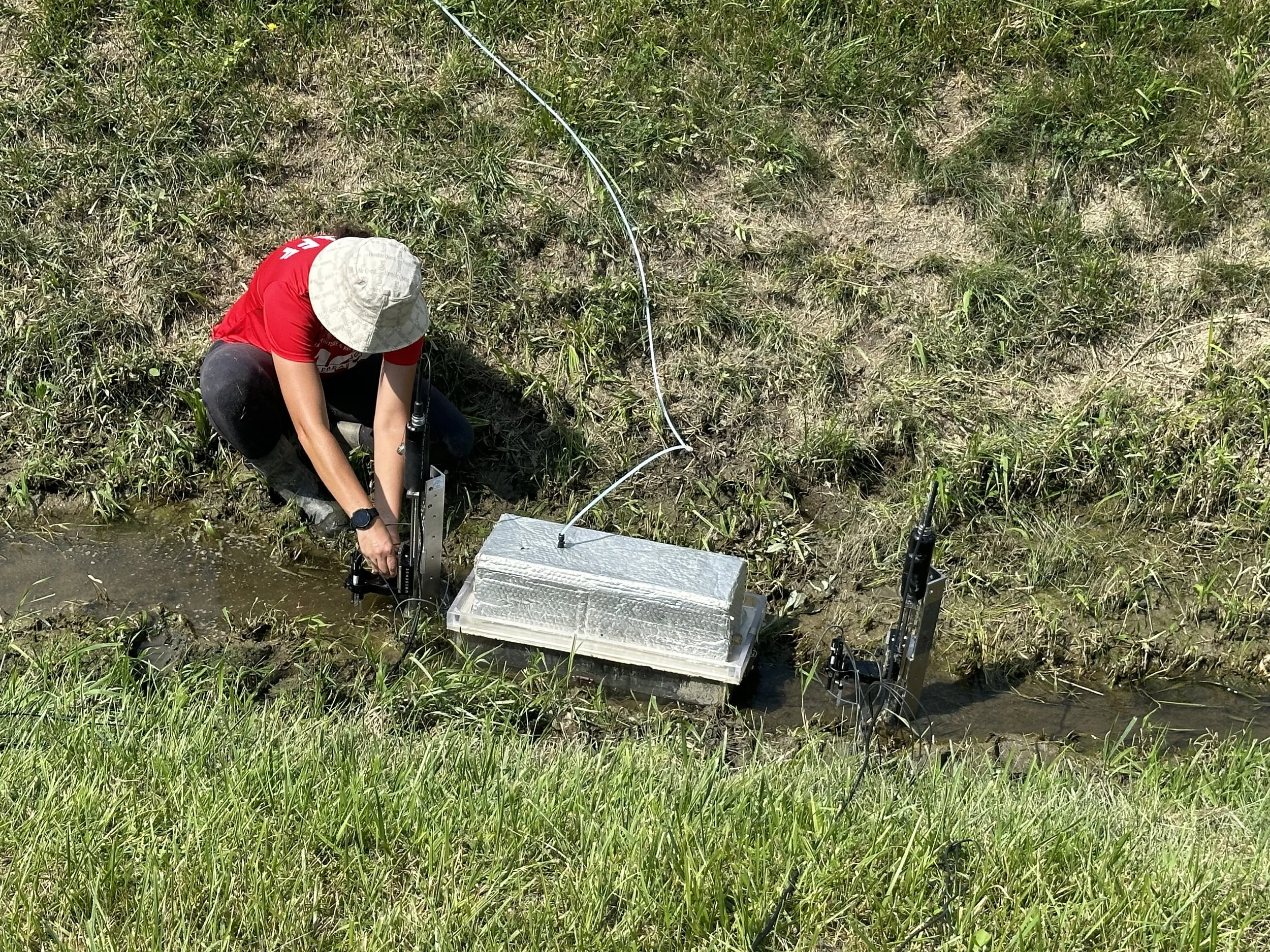
In Canada, the agriculture sector was responsible for approximately 10% of greenhouse gas (GHG) emissions in 2021, accounting for 54 MT of carbon dioxide (CO2), as well as 31% of methane (CH4) and 75% of national nitrous oxide (N2O) emissions. These estimates, however, do not include the indirect greenhouse gas emissions from agriculturally impacted waterways in the Great Lakes basin. Windsor-Essex County in Southwestern Ontario, Canada, has over 3000km of agricultural drainage ditches, collecting nutrient rich runoff from tiled fields and impacting both Lake St. Clair and Lake Erie. These ephemeral zero-order waterways experience fluxes of different types of excess nutrients, which creates nutrient hotspots and may disrupt baseline biogeochemical cycling of C, N, and P. They are also subjected to a variety of vegetation management strategies, such as dredging and mowing, which can further impact the microbial community structure and function. I am seeking the correlate microbial activity at the sediment-water interface in these waterways with N2O, CO2 and CH4 emissions. Additionally, the presence or absence of riparian vegetation will be compared to better understand the impacts of vegetation on the microbial community and greenhouse gas emissions. This work will provide better estimates for greenhouse gas emissions in Canada and offer a better understanding of current and future greenhouse gas targets.