Environmental Restoration and Geomicrobiology
Microbial Function in Hydrocarbon-Rich Freshwater Sediments
The Role of Microbes in Mitigating Oil Contamination in the Great Lakes
Exploring the roles of freshwater microbes in the growing threat of large-scale oil contamination within the Great Lakes by investigating the hydrocarbon-degrading potential of natural microbial communities across freshwater Great Lakes habitats and tributaries and cataloguing the impacts on critical biogeochemical cycles (e.g., nitrogen, carbon, and phosphorus) that constitute these environments. The natural defense against oil spills and complex hydrocarbon organic compounds (e.g., naphthalene and polycyclic aromatic hydrocarbons) is often attributed to the metabolic potential of local communities of microorganisms found within the water and underlying sediment capable of bioremediation. Research will focus on the microbial functional potential for species capable of metabolizing hydrocarbons and will apply omics-based approaches (metagenomics and metatranscriptomics) and novel microsensor techniques. Characterizing novel gene pathways during hydrocarbon degradation (alkB), as well as monitor changes to key genes within the nitrogen cycle (amoA) across these various Great Lakes waterways. This research has implications for policy makers and the public, helping to guide decisions on oil spill response and pollution control in the Great Lakes.
The Role of Microbes in Mitigating Oil Contamination in the Oil Sands of Alberta
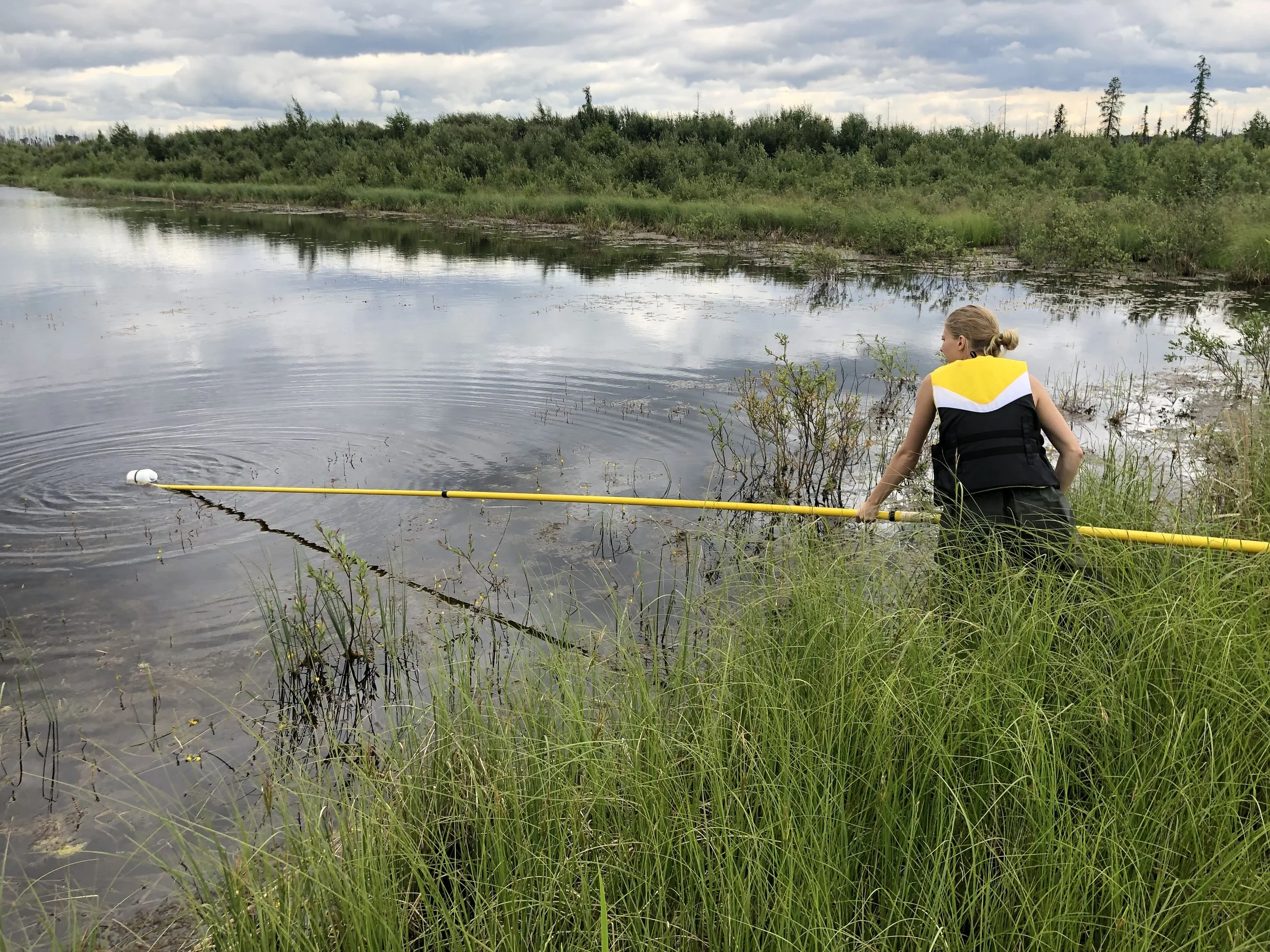
Negative anthropogenic influences on our freshwater ecosystems are increasing, as natural resources are exploited for our growing global population, resulting in increased contaminant loads to these fragile habitats. The expansions and proposals for new cross-continental oil and gas pipelines requires a need for a comprehensive understanding of how freshwater microbial populations function in hydrocarbon-rich environments. These baseline characterizations can provide insight into proposed bioremediation strategies crucial in cleaning up contaminated spill sites. Recent catastrophes and the increasing likelihood for pipeline fractures in the future suggest that this research is more pressing than ever. This study was conducted to reveal comparisons of in-situ microbial gene expression within freshwater hydrocarbon-rich reference sites cutting through the McMurray formation – the geologic strata constituting the oil sands. This is the first study to reveal metatranscriptomic comparisons in these freshwater ecosystems. Results confirm previously reported taxonomic variation, but now provide insight into the in-situ gene expression within these sites. Energy metabolism and hydrocarbon degradation genes are characterized, with emphasis on nitrogen, sulfur and methane processes, including transcripts relating to the observed expression of anaerobic methane oxidation. Expression of alkane monooxygenase (alkB) correlating to PAH concentrations at each site suggest it’s effectiveness as a bioindicator gene in freshwater environments. This information provides better linkages between natural and contaminated landscapes, closing knowledge gaps for optimizing not only oil sands mine reclamation but also understanding the biogeochemistry of other freshwater sites at risk of hydrocarbon contamination in the future.
Acid Mine Drainage
Acid Mine Drainage (AMD) is a major environmental concern that arises from the exposure of sulfide minerals to oxygen and water. Sulfide minerals such as pyrite (FeS2), galena (PbS), and chalcopyrite (CuFeS2) undergo oxidation, releasing toxic heavy metals and sulfuric acid. This acidic leachate contaminates the surrounding environment, reducing water quality and harming ecosystems. The dissolution of sulfide minerals can be accelerated by bacteria capable of metabolizing sulfur, nitrogen, and iron.
This study investigates microbial activity in mine tailings to evaluate the microbial consortia. Furthermore, waste rock material will be incubated to analyze and simulate microbial shifts caused by climate change. A parallel co-experiment will incorporate tailing material into Kinetic Leachate columns with a weekly watering regime that simulates precipitation patterns at the Red Dog Mine in Alaska to assess water chemistry. Findings from this study will improve predictions of AMD formation and contribute to developing new strategies for mine remediation and closure planning.
This project involves optimizing protocols for DNA and RNA extraction, as well as microbial fingerprinting, to better understand community dynamics and functional potential. By refining these molecular techniques, the goal is to enhance the accuracy and efficiency of microbial analysis, contributing to a deeper understanding of ecosystem responses in these extreme environments.
Influence of Nitrogen Deposition on Microbial Communities in Young Reclaimed and Reference Boreal Wetlands
Aquatic ecosystems from around the world have experienced negative anthropogenic effects from mining activities that affect both the landscape and water quality, often increasing the salinity and/or altering the pH of receiving waters. Loss of vegetation also affects resident biota as they respond to changes in pH, temperature and elevated concentrations of nutrients and contaminants that enter these water bodies. Remediation and reclamation of disturbed landscapes can take decades to show progression and evaluate the effectiveness of methods that integrate them into the surrounding environment. Although several measures have been developed to assess the changes of plants, invertebrates, and birds that normally inhabit wetlands, minimal research has been done in determining the proximal factors that directly affect wetland nitrogen and carbon cycles, such as microbial composition. Understanding the early succession of reclaimed wetlands affected by anthropogenic activity such as mining requires a comparison to wetlands that are minimally disturbed and relatively unaffected following a systematic gradient of change. An understanding of the most effective methods in remediation, can provide insight into proposing the best methods for reclaiming wetlands. Investigating the microbial communities through a variety of environmental conditions will improve the understanding of processes regulating the base of the boreal wetland food web. Microbial activity is largely responsible for the types and concentrations of nutrients and other materials found in the water and sediment such as NO2 and NH4, which often limit plant growth and are important indicators of overall change to the wetland’s environment. In Northern Alberta, wetlands are divided into 2 categories of peatland and mineral wetlands. For this study, 40 mineral wetlands were sampled that include swamps, marshes and 3 shallow open waters. 20 of the 40 wetlands were ‘reference’ off lease wetlands that would be compared to reclaimed wetlands from on lease mine sites at Suncor and Syncrude. A key characteristic of reclaimed wetlands are their sodic qualities and high concentration of hydrocarbons found within the bituminous sands. The high salt concentrations and hydrocarbons that reside in the reclaimed wetlands can inhibit freshwater vegetation and microbial growth. In recent years, microbial advancements in DNA and RNA extraction have allowed for greater characterization of microbial samples found within sediment with Qiagen kits. However, sediment collected from reclaimed wetlands for microbial characterization contain high concentrations of salts. This limits the efficiency of the standard procedures for extracting microbial DNA and RNA. However, novel pretreatment and minor changes in the SOP of Qiagen kits allow for greater DNA yield in these samples. Few studies in the Alberta Oil Sands region (AOSR) have been found to research the microbial aspect of comparing the reclaimed wetland microbial communities to off lease wetlands as well as due to the hydrocarbons that affect the results of DNA yields from sediment extraction. The sediments of reclaimed and natural wetlands in the AOSR will be sampled and analyzed to characterize the wetlands’ microbial diversity of the wetlands, to determine the effects of geochemical factors such as nitrate and nitrite on community composition, and to assess how these features change with respect to distance from active mining site emissions. Metataxonomic analysis programs such as microbiomeanalysist will be used to examine the active microbial species at a family, class and genus level in relation to the water chemistry data for each wetland. This research will provide a greater understanding of reclaimed and natural wetland microbial communities and their role in chemical transformations. It will also document the effectiveness of methods for extracting DNA from sediments that are rich in clay and contain high salt concentrations.